Obstructive sleep apnea (OSA) causes repeated episodes of reduced or stopped airflow during sleep. Snoring, witnessed pauses in breathing, gasping and daytime sleepiness are common clues.
Loud habitual snoring
Obstructive sleep apnea is a sleep-related breathing disorder in which the upper airway repeatedly narrows or closes during sleep.
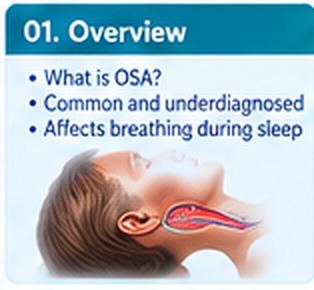
Obstructive sleep apnea (OSA) causes repeated episodes of reduced or stopped airflow during sleep. Snoring, witnessed pauses in breathing, gasping and daytime sleepiness are common clues.
During sleep, muscles supporting the upper airway relax. In OSA the airway becomes too narrow or blocked, reducing airflow and sometimes oxygen levels until breathing resumes.
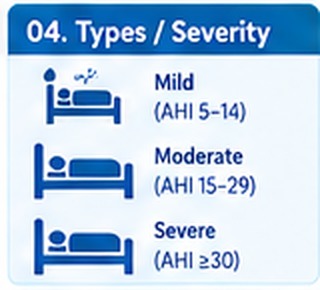
Obstructive sleep apnea is distinguished from central sleep apnea, in which the brain does not send the normal breathing signals. OSA severity is commonly described using sleep-study measures.
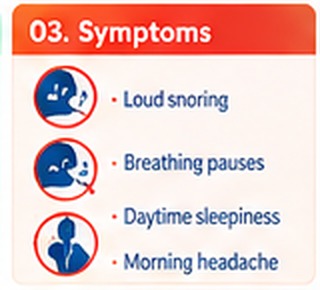
Loud habitual snoring
Breathing pauses during sleep
Gasping or choking during sleep
Daytime sleepiness
Morning headache
Dry mouth
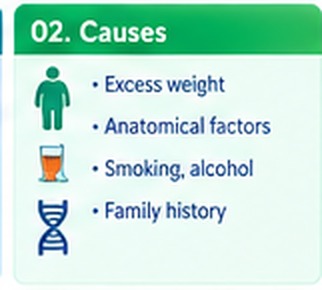
Upper-airway narrowing during sleep; excess tissue around the airway; enlarged tonsils or other anatomy; reduced airway muscle tone during sleep.
Overweight or obesity
Older age
Family history or craniofacial anatomy
Smoking or alcohol use
Hypertension or metabolic disease
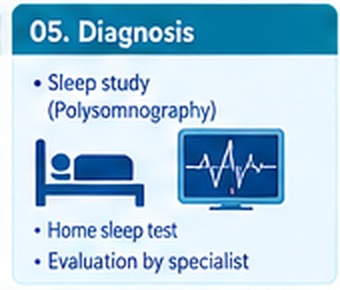
History and examination plus a sleep study. Testing may be performed in a sleep center or, for selected adults, with a home sleep apnea test.
Blood pressure and cardiovascular assessment
Upper-airway and oral examination
Sleepiness assessment
Review of medicines and alcohol use
Selected blood tests for associated conditions
Thyroid testing when clinically indicated
Metabolic testing when indicated
Home sleep apnea test
Overnight polysomnography
Sleep study with respiratory monitoring
Sleep specialist assessment
Central sleep apnea
Insomnia
Narcolepsy
Upper-airway resistance or other sleep disorders
Sleep-study severity is commonly classified as mild, moderate or severe according to the apnea-hypopnea index, interpreted by a clinician with the full clinical context.
Staging or grading systems differ between diseases. The information here is educational and should be interpreted by a qualified healthcare professional in the context of the individual case.
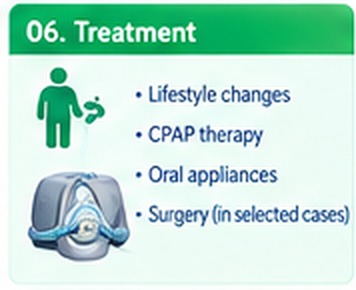
Treatment may include CPAP/APAP/BPAP, oral appliances, lifestyle measures, selected medicines for appropriate patients, or surgery/implants in selected cases.
CPAP/APAP/BPAP prescribed by a clinician
Custom oral appliance for selected patients
Symptom-directed treatment of associated conditions
Medicines listed here are for educational information only. Do not start, stop, or change a medicine without professional medical advice.
Untreated OSA may contribute to excessive daytime sleepiness, impaired concentration and increased cardiovascular and metabolic risk.
Severe breathing difficulty while awake
Chest pain or fainting
Dangerous sleepiness while driving or operating machinery
If symptoms are severe, rapidly worsening, or life-threatening, seek emergency medical care immediately.
Effective treatment can improve sleep quality and daytime symptoms and may reduce health risks associated with untreated OSA.
Survival statistics describe outcomes in groups of people and cannot predict exactly what will happen to one individual. Prognosis depends on factors such as cancer stage, tumor biology, treatment response, overall health, and follow-up.
OSA is common and frequently underdiagnosed. Risk varies with age, body weight, sex, airway anatomy and associated medical conditions.
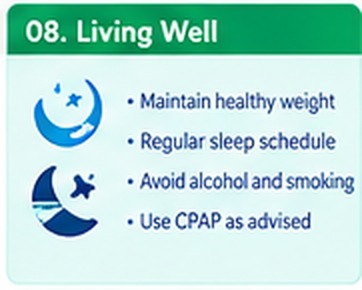
Maintain a healthy weight when appropriate, exercise regularly, avoid smoking, limit alcohol, maintain sleep hygiene and seek evaluation for persistent snoring or daytime sleepiness.
Do I need a sleep study?
Which treatment is appropriate for my OSA severity?
How should I use and clean my PAP device?
BimariDur provides educational health information to help people understand diseases, symptoms, tests, and treatment concepts. It does not replace examination, diagnosis, or treatment by a qualified healthcare professional.
Do not delay professional medical care because of information read on BimariDur.