Psoriasis results from overactive immune signaling that speeds skin-cell production. Flares can come and go, and severity varies widely.
Red scaly plaques
Psoriasis is a chronic immune-mediated skin disease that causes inflamed, scaly skin and may also affect nails and joints.
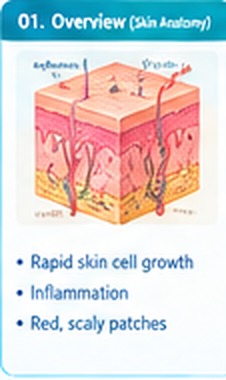
Psoriasis results from overactive immune signaling that speeds skin-cell production. Flares can come and go, and severity varies widely.
Immune signals drive rapid turnover of skin cells, producing thickened inflamed plaques and scale.
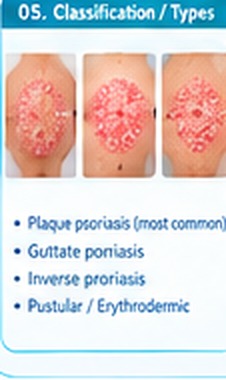
Plaque, guttate, inverse, pustular and erythrodermic psoriasis are recognized clinical types.
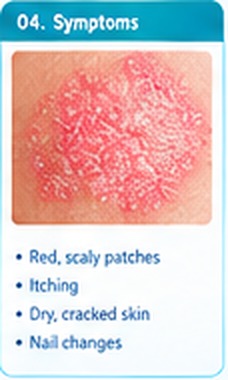
Red scaly plaques
Itching or burning
Dry cracked skin
Nail pitting or thickening
Joint pain or stiffness
Immune-mediated disease involving genetic susceptibility and environmental triggers such as infections, stress, skin injury and some medicines.
Family history
Smoking
Obesity
Certain infections
Some medicines
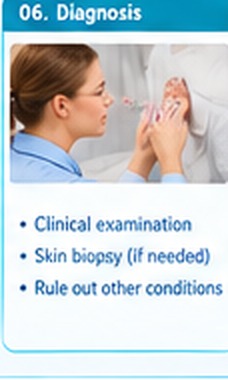
Clinical examination of skin, scalp and nails; biopsy when needed to distinguish other conditions.
Skin examination
Scalp and nail examination
Joint symptom assessment
Selected baseline tests before systemic therapy
Infection screening when required by a medicine
Joint imaging when psoriatic arthritis is suspected
Skin biopsy when diagnosis is uncertain
Joint assessment for suspected psoriatic arthritis
Seborrheic dermatitis
Eczema
Tinea infection
Lichen planus
Psoriasis is generally described by type and severity rather than universal disease stages.
Staging or grading systems differ between diseases. The information here is educational and should be interpreted by a qualified healthcare professional in the context of the individual case.
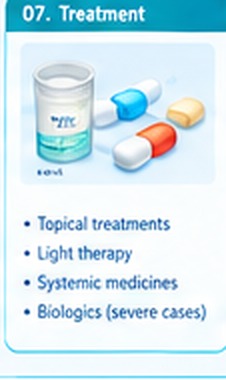
Topical therapies, phototherapy, systemic medicines and biologic therapies are selected according to severity and patient factors.
Topical corticosteroids when prescribed
Vitamin D-based topical therapy
Methotrexate or other systemic medicines in selected patients
Biologic therapies for appropriate disease
Medicines listed here are for educational information only. Do not start, stop, or change a medicine without professional medical advice.
Psoriatic arthritis, cardiovascular risk, metabolic disease, eye inflammation and psychosocial effects can occur.
Widespread redness with fever or systemic illness
Pustular or erythrodermic flare with feeling very unwell
Severe painful eye redness or vision change
If symptoms are severe, rapidly worsening, or life-threatening, seek emergency medical care immediately.
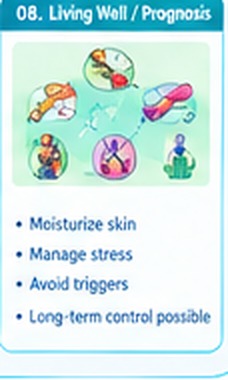
Symptoms often cycle between flares and quieter periods. Long-term treatment can control disease activity.
Survival statistics describe outcomes in groups of people and cannot predict exactly what will happen to one individual. Prognosis depends on factors such as cancer stage, tumor biology, treatment response, overall health, and follow-up.
Psoriasis affects people of all ages and both sexes; prevalence differs among populations.
Flares cannot always be prevented, but trigger management, smoking cessation, weight management and adherence to treatment can help.
Which type of psoriasis do I have?
Do I need screening for psoriatic arthritis?
Which treatment is safest for me?
BimariDur provides educational health information to help people understand diseases, symptoms, tests, and treatment concepts. It does not replace examination, diagnosis, or treatment by a qualified healthcare professional.
Do not delay professional medical care because of information read on BimariDur.